
Dubai’s rapid appreciation has made premium properties out of reach for many first-time and mid-tier investors. But the story doesn’t end there — Abu Dhabi is quietly entering a powerful growth phase, backed by economic diversification, cultural tourism, and a maturing freehold ecosystem.
With transaction values exceeding AED 54 billion in the first half of 2025, the capital is seeing sustained demand from both end-users and international buyers. This is not a hype-driven surge — it’s a measured, fundamentals-based expansion.
A Stable, Policy-Driven Market
Abu Dhabi’s appeal lies in stability and governance. Freehold ownership is now open to all nationalities in designated investment zones, encouraging long-term capital inflow. The emirate’s developers — Aldar, Jubail Island Investment Company, and Bloom — are executing projects with real delivery timelines and infrastructure, not speculation.
This policy clarity has created a steady 6–8% average annual growth rate in villa and townhouse prices since 2022, according to leading consultancies. Rental yields remain competitive, while volatility remains far lower than in Dubai.
Key Investment Hotspots
Saadiyat Island – The Cultural Core
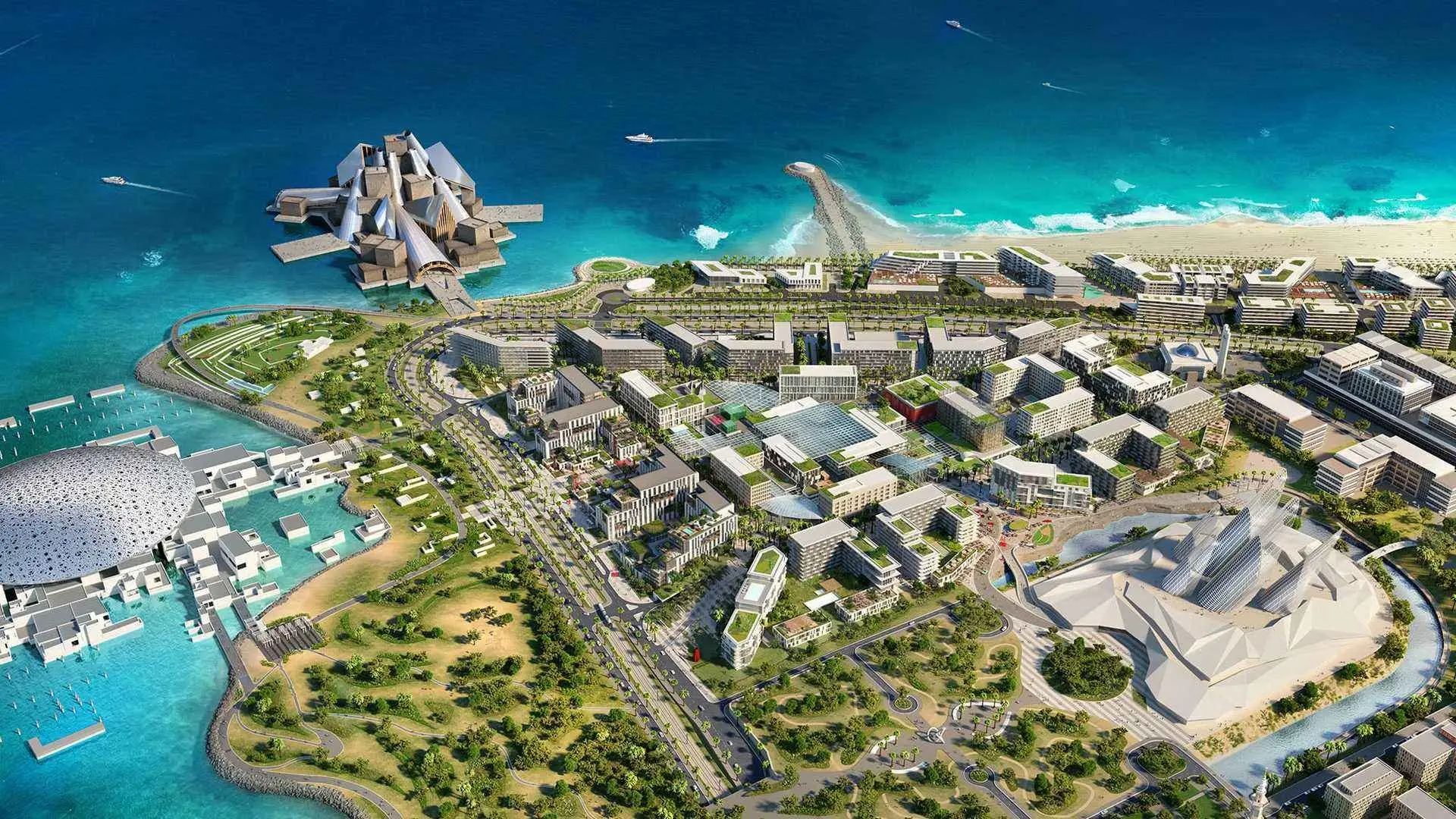
Home to the Louvre Abu Dhabi, Guggenheim, and Saadiyat Grove, this island is the UAE’s cultural epicenter. Luxury villas and beachfront apartments here offer exclusivity and scarcity — ideal conditions for long-term capital appreciation.
Yas Island – Lifestyle Meets Liquidity
Yas continues to blend entertainment, tourism, and residential life with new launches around Yas Golf and Yas Bay. Investors benefit from high liquidity — rental demand is strong year-round due to Formula 1, theme parks, and expat corporate housing.
Jubail Island – Nature Meets Nobility
A low-density, mangrove-surrounded villa community between Saadiyat and Yas, Jubail is becoming Abu Dhabi’s most desirable address for high-net-worth end-users. Limited supply and eco-focused design are already driving resale premiums.
Al Reef and Al Ghadeer – Entry Points for Value Buyers
These established communities on the Dubai border offer lower price points while benefiting from ongoing infrastructure expansion. Capital gains have been consistent, with resale prices climbing 10–12% year-on-year since 2023.
Why Abu Dhabi’s Upside Is Just Beginning
The capital’s growth curve is still early. With projects like Hudayriyat Island and Reem Hills on the horizon — and a wave of cultural, educational, and tourism development — Abu Dhabi is quietly becoming a blue-chip investment hub with long-term appreciation potential.
For investors feeling priced out of Dubai, this is the moment to look beyond the skyline.
Abu Dhabi’s fundamentals — lower entry cost, high-quality developments, and consistent yield — make it the UAE’s most balanced market for capital growth over the next decade.
Investor Takeaway
| Factor | Dubai | Abu Dhabi |
|---|---|---|
| Average PSF (Prime 2025) | AED 2,800–3,500 | AED 1,500–2,200 |
| Transaction Volume Growth (YoY) | +12% | +28% |
| Average Yield | 5–6% | 6–8% |
| Freehold Availability | Broad | Expanding Fast |
Explore Off-Market Abu Dhabi Opportunities
Homesae connects investors directly to Saadiyat, Yas, and Jubail Island launches and resale units before they hit the open market.
Rental yields and investment returns
Abu Dhabi pairs steadier capital growth with competitive income. Apartments in investment zones such as Al Reem Island and Al Maryah commonly deliver gross rental yields in the mid-single digits, while prime villa and townhouse communities on Saadiyat and Yas have shown roughly 6–8% annual price growth since 2022. The trade-off versus Dubai is deliberate: lower volatility and government-anchored demand in exchange for slightly more measured appreciation — exactly what makes the capital a blue-chip anchor for a UAE portfolio.
Property types and where to buy
Investors can access the full spectrum: beachfront and cultural-district apartments on Saadiyat Island, lifestyle and high-liquidity residential on Yas Island, waterfront apartments on Al Reem Island, and premium villas on Jubail Island. There is also a deepening commercial and mixed-use market on Al Maryah and Al Reem for those diversifying beyond residential assets. Developers including Aldar, Bloom and Jubail Island Investment Company are delivering on real timelines and infrastructure rather than speculation.
Freehold rules and regulations for foreign investors
Freehold ownership is now open to all nationalities within Abu Dhabi’s designated investment zones, with the Department of Municipalities and Transport (DMT) and the Abu Dhabi Real Estate Centre (ADREC) providing the regulatory framework, registration and escrow protections. That policy clarity — and the emirate’s overall governance and economic diversification — is the core reason international buyers and end-users keep entering the market.
Who Abu Dhabi suits
Abu Dhabi fits investors prioritising stability, capital preservation and lower valuation risk — a blue-chip complement to higher-growth, higher-volatility plays in Dubai and the northern emirates. For buyers building a balanced UAE portfolio, the capital is the defensive anchor; see how it compares with Dubai in our wider market coverage and the northern-emirate growth stories.
Risks to weigh
Liquidity can be thinner than Dubai in some communities, so resale timelines and sellers’ pricing power vary by area. As always, developer track record, location and the specific zone’s regulations matter more than headline averages.
Frequently asked questions
Can foreigners buy property in Abu Dhabi?
Yes. Freehold ownership is open to all nationalities within Abu Dhabi’s designated investment zones, regulated by the DMT/ADREC with escrow protection.
What rental yields does Abu Dhabi offer?
Apartments in zones like Al Reem and Al Maryah typically yield in the mid-single digits, while prime villa communities on Saadiyat and Yas have seen roughly 6–8% annual price growth since 2022.
Where are the best areas to invest in Abu Dhabi?
Saadiyat Island (culture and luxury), Yas Island (lifestyle and liquidity), Al Reem Island (apartments and value), and Jubail Island (premium villas) are the leading investment zones.
Is Abu Dhabi a safer bet than Dubai?
It is generally lower-volatility with government-anchored demand, making it a blue-chip, capital-preservation choice — at the cost of slightly more measured appreciation than Dubai.
Who are the main developers?
Aldar is the dominant developer, alongside Bloom and the Jubail Island Investment Company, all delivering on real infrastructure timelines.
Want a Dubai-vs-Abu Dhabi comparison for your budget? Talk to the Homesae team.